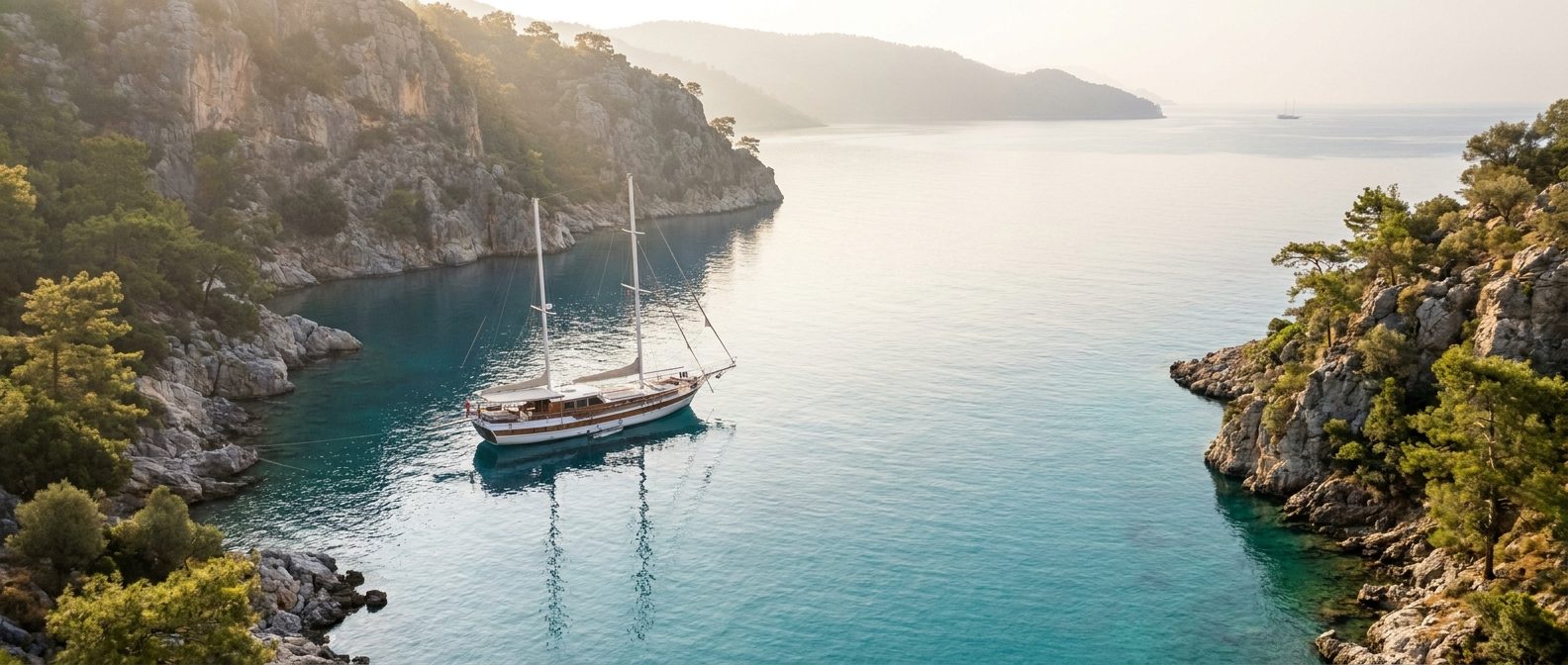
Bodrum's coastline has two faces. One is the face everyone knows: the beaches filled with loungers, music, and crowds. The other opens only from the sea, beginning the moment the engine falls silent and the chain runs out. To know this second face, you have to be on a boat. Below are ten coves around the peninsula that have managed to stay just beyond the crowd — clear water, good holding, quiet evenings.
The Gökova Side: English Harbour, Çökertme, Karacasöğüt
The Gulf of Gökova is the paradise Bodrum turns its back on. English Harbour is an enclosed natural haven where the pine forest runs down to the water and ships hid during the Second World War; you hear leaves, not wind. Çökertme, a shallow sandy bay immortalised in a folk song, is ideal for dinner at anchor. Karacasöğüt is one of the gulf's most sheltered anchorages — the place to retreat when the afternoon breeze hardens.
The Two Faces of Karaada: Aquarium and Pırasa Bay
Karaada, directly opposite Bodrum harbour, offers another world half an hour away. Aquarium Bay earns its name: the water is so clear the boat seems to hang in mid-air. On the island's other side, Pırasa Bay has warm, sulphurous water seeping from a shoreside cave and mud said to be healing — a stop known since antiquity.
The South Shore: Kargı, Bağla, and Orak Island
The peninsula's south offers plainer coves facing the open sea. Kargı and Bağla, with their broad beaches, suit a midday anchorage. But the region's star is Orak Island: the turquoise water on its lee side is among the clearest swimming spots around Bodrum. Arrive early and the cove is yours for a while.
The Western Tip: Gümüşlük and Küçükbük
To the west, Gümüşlük, with the submerged ruins of ancient Myndos and the shallow causeway to Rabbit Island, is a sunset classic; anchor a little off and go ashore by tender. Further north, Küçükbük offers a sheltered, quieter alternative.
Before You Drop Anchor
In most of these coves the breeze strengthens through the afternoon; a bay calm at dawn can chop up by late day, so plan the day's anchoring around the wind. The bottom is usually sand and mud, with good holding — but avoid dropping on posidonia (seagrass), which holds poorly and damages a protected habitat. Always pick a "plan B" cove: knowing where to run if the wind shifts is the first condition of a peaceful night.
The magic of these coves also depends on the season. In the peak weeks of July and August even the best-known bays fill up, so weighing anchor at first light is the shortest way to have a cove to yourself before the crowd arrives. Late spring and September are the sailors’ secret season, when the water is still warm and the coves nearly empty. The same route offers a completely different cove depending on the day, and even the hour — so plan around time, not just place.
ROUTE DESIGN →