The good old days of anchoring at random are coming to an end — and for most guests, that is actually good news.
In Issue 1 we covered the protection decisions for the bays of Göcek. Since then, the picture has taken concrete shape. In the Fethiye-Göcek Special Environmental Protection Area, 926 sea anchors and 906 mooring buoys were installed across seventeen bays, creating a marine conservation network that will serve a total of 856 vessels.
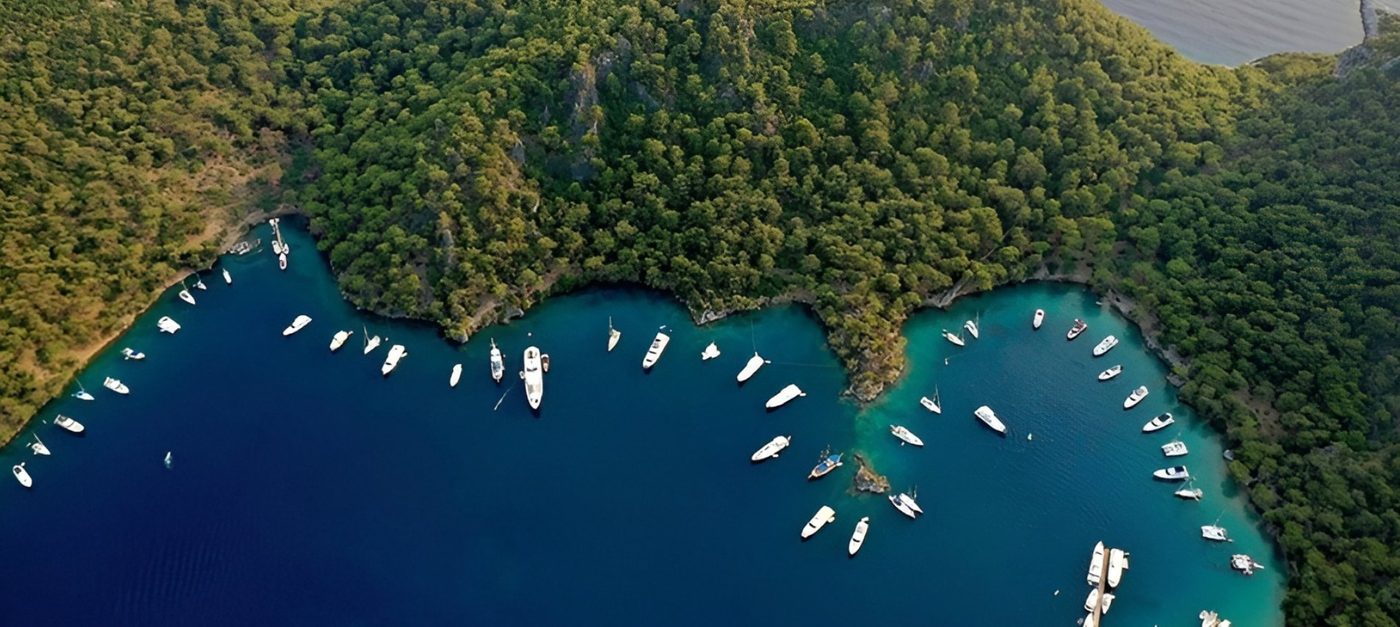
The Real Issue: Seagrass Meadows
The aim can be summed up in a single word: Posidonia — the seagrass meadows. These slow-growing meadows are among the Mediterranean's most valuable ecosystems: invisible gardens that give the water its clarity, shelter marine life, and capture carbon. Every anchor dropped at random tore away a piece of them. The mooring-buoy system ties the vessel to a fixed point so the anchor never touches the bottom at all.
A Debate Still Unsettled
The system also observes a delicate balance. Under the regulation, it was decided that no mooring buoys would be placed over archaeological protected sites; a case seeking a stay of execution on the matter is currently proceeding before the Muğla Administrative Court. In other words, this is not yet a fully settled structure with the debate behind it — it is an evolving, contested, still-forming framework.
What It Means for the Guest
At first glance it may look like a restriction: you can no longer drop anchor wherever and however you please. But on a second look, the picture reverses. The mooring system brings predictability. A bay's capacity is known, your place is secured, and you spend the night without worrying about dragging anchor.
More importantly: the meadow you protect is tomorrow's clear water.
For an experienced operator, this order is not an obstacle but a planning advantage. The right route, the right time, the right bay — when all three are known in advance, the flow of the charter is seamless. At Oxygen we see this new order not as a constraint, but as a means of offering the guest a calmer, safer experience. Protecting the sea is, in the end, the only way to keep offering it tomorrow in the same beauty.